
New Hope for Health Care – Value Proposition

It always amazes me that after spending over $800,000,000 USD (as required by the FDA) to approve a medication for a specific disease, and after conducting dozens of placebo-based double blind human studies, the results of these studies are rarely publicized by the pharmaceutical companies. In many cases, the study results are even hidden behind foundations or other barriers to prevent inspection by the public eye.

Even more amazing to me, after a medication has been released to be sold to the public, there are rarely follow up studies to determine the real-world safety and efficacy of such (unless a large number of people are gravely harmed by it). Any attempt to hide scientific research that is of paramount public interest has never set well with me, especially when the research has been financed by public funds. I speak from the viewpoint of a PhD level researcher.

The adverse side effects of medications, however, are required to be publicly disclosed. Evidence of this can be seen in pharmaceutical advertisements. Public advertisements often feature actors that are depicted as being happy to be free from the ravages of the disease but offer little else of substance except for occasional mild claims that it works under certain conditions. This is then followed by the long list of possible side effects.

New hope for health care simply comes with a better public disclosure of the scientific study results. Imagine if there was an official government website that published the scientific findings on treatments from all credible sources, summarized on a table that looks something like this:


Disease: Flojitis Type x (fictional)

TreatmentDescriptionLength of
Treatment
Improvements
Observed
Average %
of People
Improved
Cost
per
month
Side Effects
Blue Pill2x daily……Life……controlled…23%$2400…kidney…
Mineral xinfusion…3 weeks……reversed…81%$350…nausea…
If you had this disease, which one of these treatments would you choose?

My intuition tells me that this would probably be a VERY popular website. Especially if it was comprehensive, unbiased, and verified by independent scientists. The real evolution would come when people start to realize that they have the freedom and information to make informed decisions between various treatments.

The whole health care market would shift overnight. Verified treatments for certain diseases would become fiercely competitive. The science behind treatments would fall under strict scrutiny. Pharmaceutical companies, universities, and hospitals would hustle to find better, more cost-effective, solutions. The entity that found better methods would profit the most. Cost of health care would plummet. The quality of treatments would skyrocket. The number of options would compound.

In short, the health care system would naturally be healed, everyone would have a new hope for health care. What do you think? Please leave your opinions in the comments.

Standard

New Hope for Health Care

Walking into a modern hospital always gives me a sense of apprehension. Sometimes I experience an unsettling feeling of uncertainty, I am not sure what to expect. Other times I feel profound sadness, hopelessness, and sometimes emotional pain as I anticipate many shades of suffering. As an incurable optimist and medical researcher, I have often felt a sense of hope that some medical professional inside will know enough to fix the health problem that I am struggling with. As a realist, however, I know many of the limitations of medical science. Very seldom do I ever feel a sense of surety or freedom.

Imagine that you need to go to the hospital; how does it make you feel?

I have an entirely different experience walking into an electronics store. Before going in, I have already spent some time researching what I want to purchase. I know the expected prices. I know the quality and capabilities of the products I want. I have checked the reviews. I have purposefully chosen a store with great service. I still hope that someone inside knows enough to help me fix any problem I struggle with. Often, I feel a sense of surety and freedom. I am excited about seeing some new cool stuff. I feel I can make the best educated choice possible.

How do you feel when you walk into your favorite retail store?

Since health is so important, wouldn’t it be great to feel more confident in the health care system? Wouldn’t it be great to know what to expect before walking into the hospital or doctor’s office? What if you knew the available treatments, expected outcomes, and how much it would cost to get better? What if you could make the best educated choice beforehand? Wouldn’t it be wonderful to feel better and get your life back without the unnecessary pain or loss of freedom?

Our amazing mind is built to evaluate millions of pieces of information and to put them together. When there is a perceived benefit or danger, our feelings help guide us. We purchase things more based on feelings than rational thought. This is an amazing ability, and its effects are well known. It generally helps us to progress, to have a better future. Can this amazing ability to feel help us to find a way to make a better health care system?

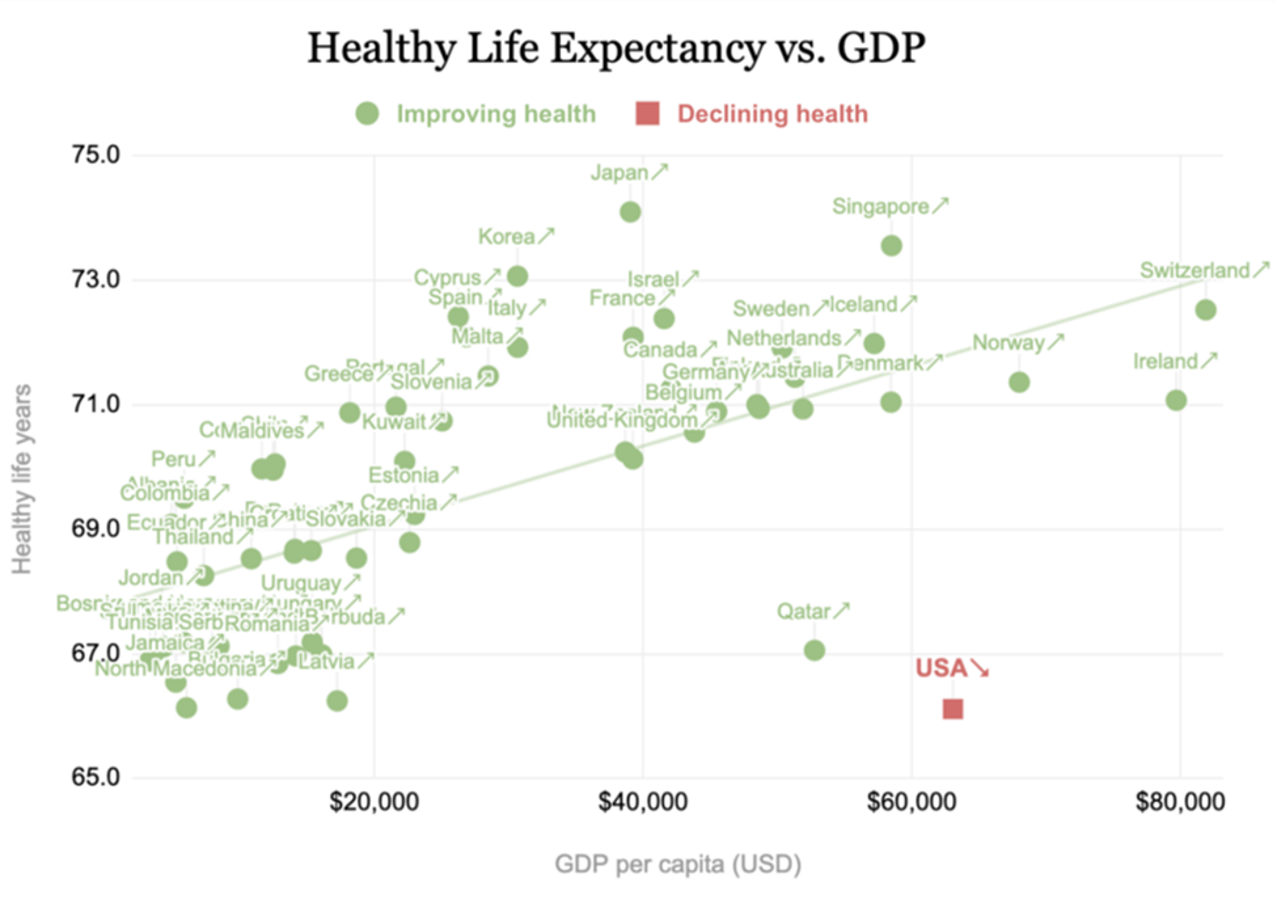
A radically better health care system is certainly needed. We all feel it. In the United States, where I live, health care costs are escalating, and benefits are decreasing. Despite spending more, up to 25% of our GDP, our healthy lifespan is going down. This is a sure indicator of an unhealthy system. The health care system profits more from sickness than it does from wellness. In contrast, with a healthy system, the prices go down and benefits increase. This is why we all love the electronics industry so much.

What if we were to build a health care system that is designed to profit more from wellness than from sickness? After many years of being a professional in the health care industry, I have found many ways to do this. It gives me a feeling of great hope and excitement. I have grown weary of standing by and watching people suffer when there are many proven solutions available.

This is a first of a series of posts that offers a view of new hope for health care.

Standard