So far, we have been exploring a 1-dimensional “space” of points along an infinitesimally thin line. Mathematicians call this a 1-dimentional space. The concept of symmetry implies that the line looks exactly the same in both directions. Therefore, this line must extend on forever in both directions, there is no point on the line where it ends. The line looks exactly the same on both sides of every point.
The concept of point symmetry in 1-dimensional space also means that if you were to reverse the direction of the “ruler” that measures the distance between any two points in this space, you will still measure the same distance between the points. This concept of invariance of direction is one of the most important characteristics of space. Of course, we need a lot more than just one line to describe all the space around us.
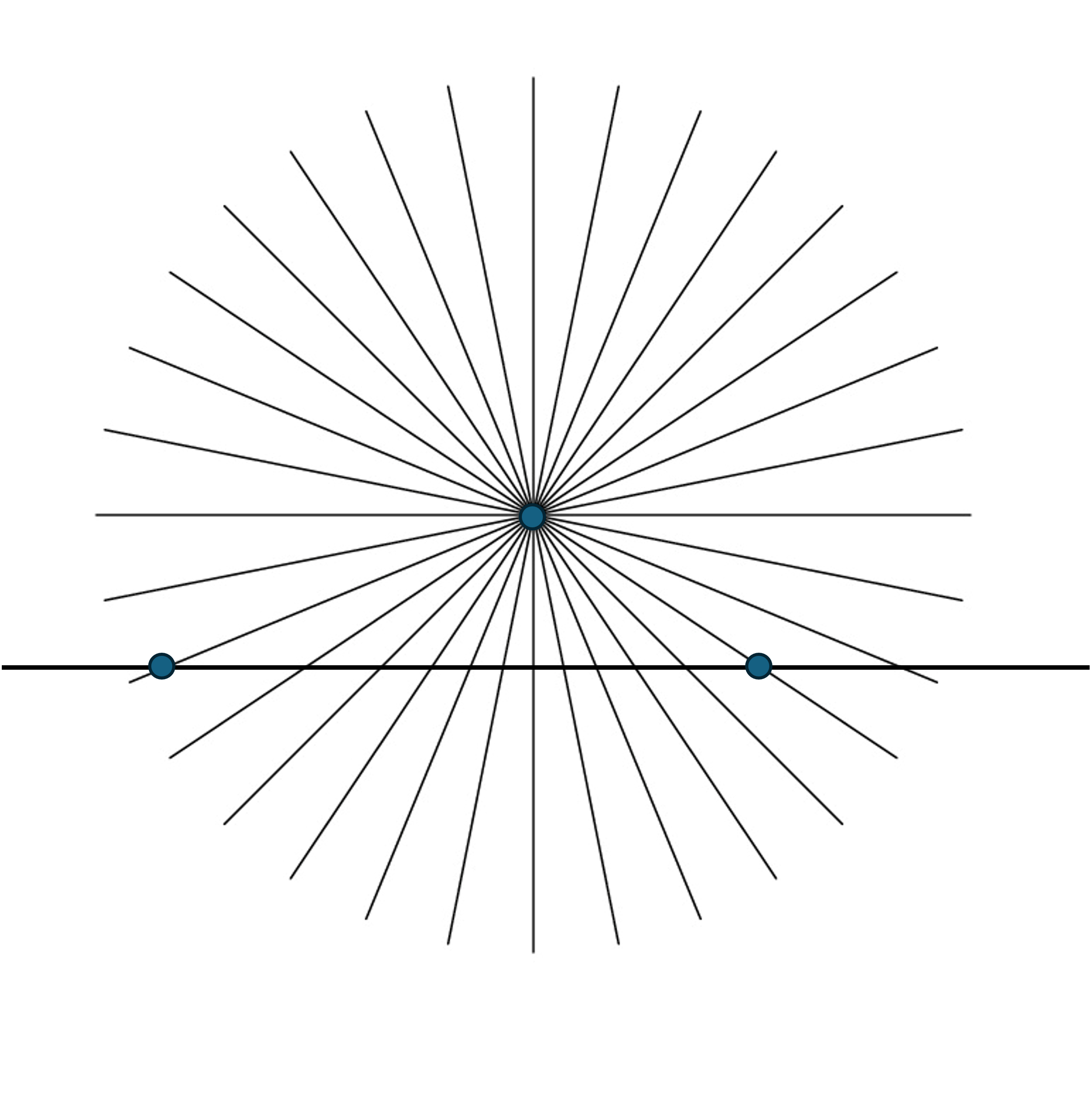
In order to expand the dimensions of space beyond this 1-dimensional space, we must assume that there is some point that is not in this space, a point that is not on the line. When we find a point that is not on the line, we can create a new line between any point on the line and the new point. This defines a new 1-dimensional space (a line) for every point on the original line, all of these new lines pass through the new point.
Since there are an infinite number of points on the original line, we see that there are an infinite number of 1-dimensional lines that can be drawn through the new point all in different directions. The space formed by this infinite number of lines is called a 2-dimensional space. It is called 2-dimensional due to the “language” necessary to describe the location of any point in this space. To locate any point, we must choose a reference point, then first (1) we need to choose one of the lines passing through the reference point, and second (2) we use the methods we have already discussed to determine the location of a point along this reference line. Thus, the location of a point thus requires 2 numbers, one (1) to locate the reference line, and the other (2) to determine the location of the point along this line.
The concept of point symmetry in 2-dimensional spaces also comes into play. It means that measuring distances is the same in every direction. This invariance of direction means that if we have a “ruler” that measures a distance along any of the lines in this space, and we change the direction of the ruler, the length of the ruler does not change.
Imagine how the world would look if measuring lengths in one direction were different than lengths in another direction. If the invariance of direction was not true, then when we changed direction, the distance between things would shorten or lengthen, depending on which direction we faced. This is not what we experience in real life.
We can use the same concepts that we used to extend 1-dimensional space to 2-dimensional space to extend into spaces into any number of dimensions. How many distinct points do you need to generate a 3-dimensional space? Think about it. We will discuss how it can be done later.
If we were to consider any two points in the universe (A and C) and draw an imaginary line segment between these two points, there would be only one singular point on that line segment that preserves symmetry (under reflection). This is the midpoint (B) on the line segment which is exactly the same distance from each of the endpoints. You can reflect (flip) either one of the endpoints through the midpoint and it would fall exactly on the other endpoint. Such symmetry applies to all points on the line segment that are the same distance from this midpoint.
If you were to pick the midpoint as the reference point and the positive direction pointing toward one of the endpoints, then from the midpoint, the line segment in the positive direction looks exactly the same as the line segment in the negative direction. You could conceptually switch the positive direction with the negative direction, and nothing would change. This is called reflection symmetry, for obvious reasons.
If you have reflection symmetry, then anything that exists at a certain distance along the positive direction, also exists at that same distance in the negative direction; just like looking at things through a mirror. We use such symmetries in atomic physics all the time to make things easier.
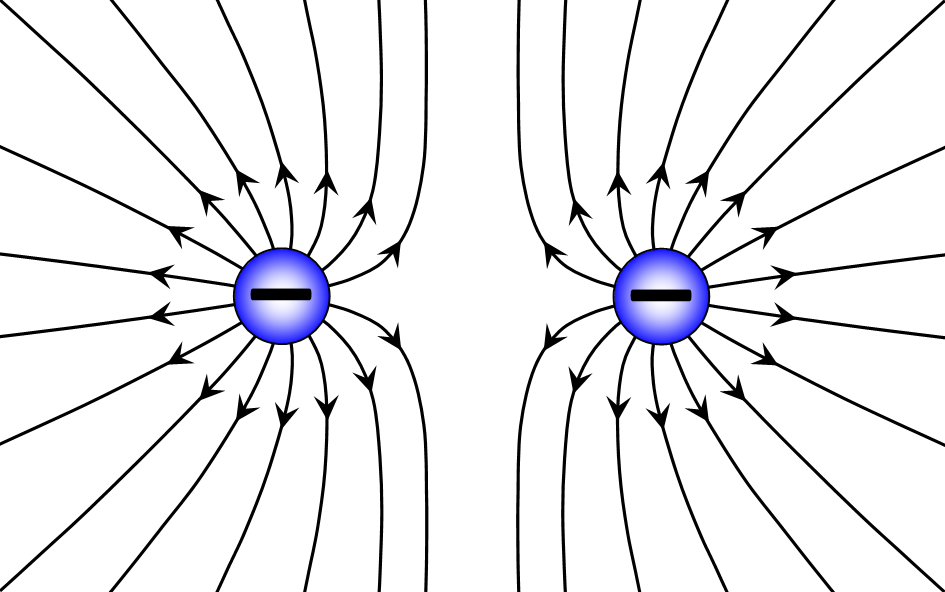
For example, the electric field between two identical electrons, as observed from the midpoint between them, looks exactly the same when you are facing one electron as it does when you are facing the other. From the midpoint, everything is exactly the same in both directions, you cannot tell the difference between the electrons nor any of their physical properties from this perspective. To tell the difference, you would need to “break the symmetry” by introducing something else that is not symmetric to the midpoint.
So, once you have seen what exists on one side of the “mirror” we also know what will exist on the other side. It makes the math (and the diagrams) so much easier. We always should seek out these points of symmetry when we are doing the math, it makes everything so much more…symmetric.
Have you ever been in a place where your life seems unresolved? Have you felt that the dreams you have had for years, those things that have inspired you, the things you really wanted to happen, always seem to be out of reach? Have you wondered why no matter how hard you try, or how much your heart desires it, or wherever you go, you don’t seem to be able to achieve it in your life? Are you sensing that your time, your health, your strength are gradually fading away?
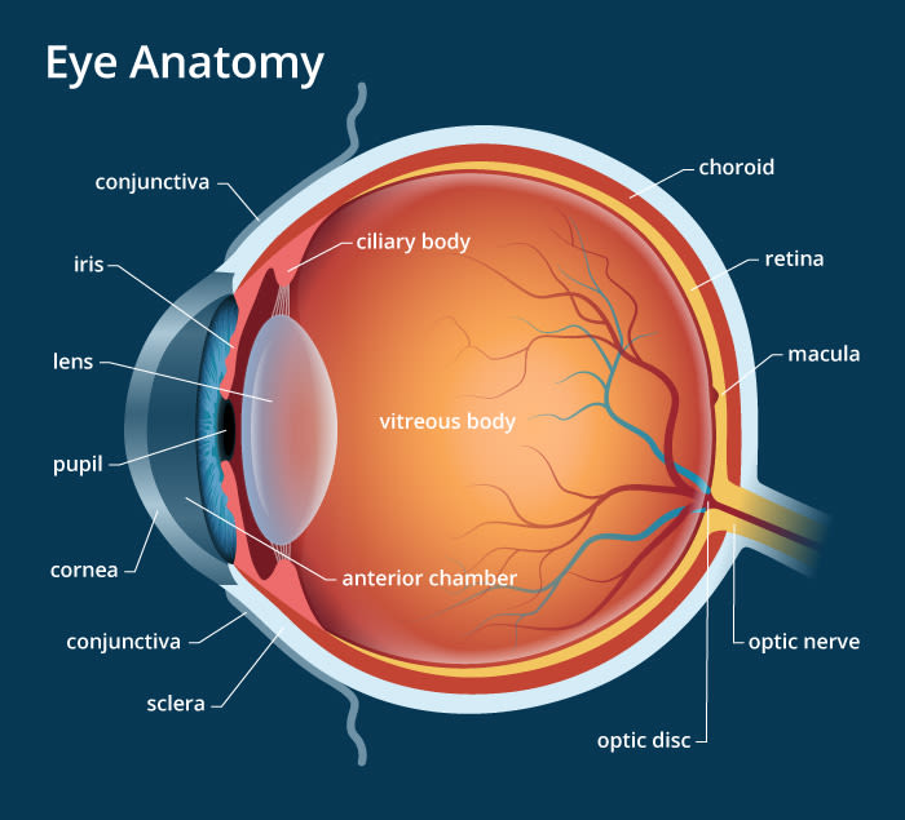
There is really only one way to create and realize the things desired in your life. It always starts with clarity of vision and focus. How clearly can you see exactly what IT is? Your eyes focus the light bouncing off real objects in your environment to form a clear image of them on the back of your eye. There the retina transmits this image to your mind. There is only one tiny spot on the retina, called the macula, where the image is crystal clear. As you move your eyes around, your mind pieces together an image of the reality of your world. Your mind only retains the images of things that are of the greatest importance to you. Your world exists entirely in your mind.
Do you realize that this works the other way around? The images that you form in your mind are the things that you make into your reality in the world around you. Everything you see in your home was first created in the mind of someone, in all its detail. You placed such objects in your home according to the vision in your mind. The process of creation starts in the mind. To the extent that you can imagine and form your reality in your mind, will you be capable of realizing it in the world. Everything in your world starts with an image of it in your mind. The first step to achieving anything you want in your world is to form a crystal-clear image of it in your mind.
The power of imagination is the power of creation. The more real and resolute it is to you in your mind, the more likely it will become your reality, in all its glory. According to the creation story in the Bible, even the earth was created in the mind of God before it existed: “And God said, let there be light, and there was light.” This is a powerful principle. If something you desire does not exist in your life, the first step is to work to form a crystal-clear image of it in your mind, with all of its detail. Otherwise, you will find it hard to arrive at the place you want to go if you don’t know where it is, or what it is. Imagination requires real work.
I will give you an example from my own experience. I have always wanted to see a global health care system that really works, based on the verifiable truths being discovered by science. How wonderful it would be to live in such a world. I have seen technologies that drastically accelerate the speed of tissue healing, disable harmful microbes, and heal whole organs. I know how we can prevent more than 80% of the horrible diseases that we currently suffer. This vision has not been realized in my world yet.
I imagine a world where everyone would have the tools and knowledge they need to heal themselves. I have formed a Cellular Health Coaching organization that provides these tools and teaches my friends to heal themselves. I have finally come to see that the that the only way to realize this vision is to create it in my mind and share a crystal-clear vision of it to the world, complete with the necessary infrastructure. My heart is full, I am now recommitted to this vision. I hope to bring this realization to your world also.
If you have fun with the concept of being able to zoom in to a single Point forever, always getting closer and closer but never arriving, you are one step closer to understanding the concepts of advanced math and calculus. You saw that with any two points you could always find a point that is exactly in the middle. You can then take this midpoint as a new end point and find another point that is in the middle of it. Since points have no size, you can keep on cutting these line segments in half forever.
No matter how close two points are together, you can still find a point in the middle. Thus, there are an infinite number of points in any line segment, no matter how short it is. This is an example of the concept of a countably infinite set of points. It is possible to write out list the location of these points as their distance from the reference point: 1/2, 1/4, 1/8, 1/16, … and so on forever.
You could just as well cut the segments into thirds, with the location list of points: 1/3, 1/9, 1/27, … and so on forever. Notice that this list of points does not have any of the same points as the one in the last paragraph. So, it appears like you could go on forever filling in all the gaps by dividing the segments up evenly and still never fill in all the gaps. So how many points can fit into the line segment between any two endpoints, no matter how short? Can we ever find a way to fill in all the gaps between points? To fill in all the points between any two points, we would need what is called an uncountably infinite number of points. This is a concept that mathematicians have not yet resolved.
Let’s imagine that you have a universe with only two points in it. You now draw a line segment between the two points and choose one of them to be the reference point. The location of any point along the line segment is now determined by the distance it is from the reference point. Now make a third point on the line segment that is exactly half-way between the two points. This new point is located at exactly half of the distance between the two end points.
Can you see the symmetry that is formed by these three points? The distance from the center point to either of the two end points is exactly the same. If you now were to choose the center point to be the reference point, then both end points would be the same distance away, but in opposite directions.
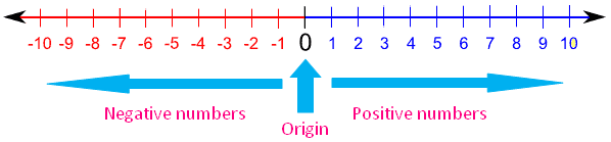
You would now need more than just the distance measurement alone to determine the location of points along the line. With three points, now direction becomes important. Again, using the axiom of choice and can choose which direction from the center point is positive, and which direction is negative.
We can then, finally, determine the location of every point on the line by specifying both a distance and a direction (positive or negative) from the center point. This arrangement of determining the locations of points on a line is called a “number line”. We call the distance and direction of each point on the line the Point’s coordinates. A Point’s coordinates uniquely determine its location on the line. Finally, we have a way of determining the location of a Point.
The center point is a special point of symmetry between the two endpoints. We can “rotate” the direction (exchange negative for positive directions) and the location (distance and direction) of the two identical endpoints would be exactly the same. This is called “rotational symmetry”. It means you can switch reference directions and the list of all the point coordinates will be the same. Remember that since you can’t tell the difference between points, the order of the list of points is not important.
Please believe me, taking the time to understand these concepts makes math so much more fun and easier later on. Learning these concepts is like learning the basic vocabulary of the math language.
How can the exact location of the Point be described? This is a conceptual problem. It is also where some very advanced concepts of math (found in calculus and number theory) come to play. After some thought, it becomes obvious that if there was just one point in the universe, all by itself, it does not have an absolute location until you look at where it is relative to another point in the universe.
If there were only two points in the universe you could imagine a line segment drawn between the two points, and then there is some distance between the two points, you could pick one of the points as the reference point. Then you could describe the location of the second point as being a certain distance from the reference point. You only need one (1) distance measurement from the reference point to describe the location of the Point. This is why such a line is called 1-dimensional space.
You have now discovered quite a few interesting concepts, including the concept of the number “2”. Two identical objects in space that are distinguished by the distance between them. You have also discovered the concept of the number “1”, the concept of distance, and you are also starting to realize why Einstein’s theory is called the theory of relativity. Distances and times are only measurable relative to a reference point, and you can pick any of the points to be the reference point.
The idea that you can pick any of the points to be the reference point is called the axiom of choice. An axiom is something that is assumed to be true even though it has no definite proof. The axiom of choice forms the conceptual foundation for all mathematics.
Another concept that comes from using the distance from a reference point to describe location is the idea of symmetry. You can exchange the locations of two points, and you have not changed anything. It is impossible to tell the two points apart, and both points still have the same locations relative to every other point. This is called exchange symmetry. Symmetries makes math and physics much easier.
The most singular concept in Math is that of a Point. In math language, a Point indicates a location in space that has no size or shape (it has no dimensions). People often represent it by a dot “.” on a piece of paper. But, the dot itself has a size and shape, and so it does not qualify as a point.
If you were to magnify the dot, you might be able to find the ink-atom that is nearest the exact center of the dot, but this is not the Point either because atoms have a size and shape. You could try to find the exact center Point inside the atom, but whatever you pick has a dimension and still would not satisfy the definition of a point. This is where you really need to start using your imagination.
Soon you would zoom in to a space around the point that is so small that everything else would be so far away in comparison that you could no longer see any of it, and the only thing inside this tiny space would be the Point itself. You could keep on zooming in for all eternity until the only thing in all space around it would be the point itself.
The Point has zero dimensions. The point itself does not even exist. In math language, it is infinitesimally small. So, what is the Point? By the definition of a Point, it has no size or shape, but it does have an exact location. Exactly how can we describe the location of the Point?
I miss sharing my thoughts with you and hearing your thoughts in return. I haven’t been very verbal lately, mostly because there have been some difficult circumstances in my professional life. I have not felt the need to talk about them and yet they have weighed heavily on me.
There are so many things that I want to do to change in the world, I know many solutions of great value and have struggled to find an effective way to get cellular health solutions out to the people who need them. Through all of this and years of learning from the masters, I have found that the only way I can change the world is to change myself into the person that is able to accomplish the visions I have in my own life and then reach out to others. I am redoubling efforts on my professional pursuits also.
I would very much like to get back into contact with all of my friends throughout the world and continue to share with you things that are meaningful and powerful to me, and so I am restarting some weekly blog posts and social media posts to share my thoughts with you. And since I am passionate about atomic science and math, I also would like to post a few “fun” posts on these topics as well. If getting in touch is interesting to you, please join our community discussions, weekly. They are at present on Thursday at 9:00 am mountain time on zoom:
In essence, mathematics is a language. Like any language, it allows you to express concepts that are in your mind. Just like the symbol “TREE” invokes a concept in your mind (with branches and leaves) mathematical symbols also allow you to express many kinds of concepts that exist in your mind. If you can imagine it in your mind, you can devise a symbol to express it. The best part of math is being able to use pure imagination to express all sorts of concepts you form in your mind with symbols you can write down such as “1”, “2”, “3”,”x”, “y”, “z”, etc.
The whole trick to learning math is to understand the concepts behind the symbols people use to express them. This requires that you use your immense power of imagination to capture these concepts. Relax, there really are only a few basic concepts behind the language of math. Even small children can learn them. I will explain some of these concepts to you in this Math Moments Series. What you make out of them can become very interesting.
The real fun in math comes when you realize that you can manipulate (play with) these symbols to form new concepts. These new concepts then become part of your reality. For example, physicists (like me) can use these concepts to better measure and understand how atoms behave. These are the concepts we need to create electricity, motors, cars, computers, and tons of other very useful things in our world.
Mathematics is, in fact, the language of physics…and physics is the study of everything that exists. This language is not really that difficult to learn, you are even allowed to make up symbols to mean almost anything you can think of. Learning this wonderful language is really worth it.
I have always loved truth. Pure truth exposes what was once in the dark. A bright light brought into a dark room eliminates the darkness and reveals what is in the room. Truth is power. The love of truth motivated me to earn my PhD in the discipline of atomic physics. Along the way, I have found that there are things that we know about the foundational nature of nature (atoms, subatomic particles, energy fields, and so forth). After all, I have come to understand that the things we don’t know are vastly greater than the things we know. The things that we don’t know that we don’t know could be infinitely greater than this. The wonder of it all is beyond words.
One of the most important discoveries that I have made is in the field of cellular redox signaling. I identified a composition of reactive oxygen species that plays a major role in the natural healing process. With my training in nanotechnology, I was fortunate to have the knowledge necessary to analyze, stabilize, and mass produce the molecular composition of this cell-signaling compound. The results far exceeded expectations. This liquid composition was shown to be completely safe anywhere in or on the body, wherever it was applied healing was greatly accelerated. I wrote several patents on this technology. This composition contains the same ROS molecules that cells produce to detect tissue damage and signal cell repair. When it touches cells and tissues anywhere in the body, it kills pathogens, reduces inflammation makes tissues heal many times faster, stops bleeding, releases endogenous antioxidants, and normalizes immune function. This redox-signaling technology will certainly spearhead some of the greatest advances in health science we will ever see.
My specialization is in nanotechnology, exploring how small groups of atoms interact and form structures and molecules. What nature looks like on the smallest scale (billionths of a meter) is incredibly fascinating. The applications of nanotechnology in biology make these scenes even more incredible. The human body consists of 50 to 100 trillion cells. There are more than a billion cells in the tip of a finger. Imagine shrinking down to a size where you could dive into one of these cells and observe what is happening inside. Entering the cell, a metropolis of moving molecular machinery would be seen. This machinery is made inside the cell, designed by the coding of the DNA. Thousands of different types of these nanostructures (biological molecules) would be observed, moving around, interacting, self-assembling into structures, breaking apart, and performing the miracles that keep the living cell working. Nature makes nano robots in cells with such amazing complexity that nanotechnologists could not even dream of inventing them. We understand less than 1% of what is happening inside cells. Imagine trillions of coordinated molecules working together needed just to construct a single hair.
These amazing molecular nano robots in the cells are made of atoms that follow the laws of atomic physics. They interact with each other through electromagnetic fields, they conserve momentum and energy, their behavior can be somewhat understood through the laws of quantum mechanics. This is the reason I started to study atomic physics, to understand, at some level, how the nano robots of nature work. Over the years, I have come to realize that, besides the enormous complexity, there are simple concepts that govern how it all works. I could not fathom the whole of it, but I can understand what is necessary to keep cells thriving. In human cells, for example, oxygen, salt water, some 100 types of nutrients, are important as raw materials. This is relatively simple to understand. We also realize that if any of these materials are missing, the cells cannot operate as well. We also realize that the raw materials go into the cell, they are machined into the complex nano robots, and certain molecules come out. A careful balance, called a homeostatic balance, must be maintained so that you have just enough (not more or less) of the raw materials necessary to build the end products and meet the demand. These concepts are easier to understand, they apply to any business that is involved in making products.
The foods we eat, the water we drink, and the air we breathe must contain the raw materials that our cells need. In our societies we grow food, build houses, and form industries, to provide our cells with the things they need. The communities we form act a lot like the communities of cells inside our body, they work together to provide each other with the things they need to keep thriving. The laws that help us build thriving communities are very similar to the laws that cells must follow to build thriving cellular communities inside our tissues and organs. This makes the natural laws of cellular health more understandable. Our body contains the systems that are needed to supply our cells with the things they need. The cardiovascular system is the transportation system, for example, that brings the needed supplies to our cells. The streets are the blood vessels. The nervous system forms part of the communication networks needed to coordinate efforts throughout our huge communities of cells. Your assignment is to list some of the other body systems and compare them to the systems we have set up in our communities (stores, factories, garbage collection, energy generation, etc.)
Everyone should get to know the basics; what I call the 10 natural laws of cellular health.
How much needless suffering could be eliminated by putting into practice a few simple laws of nature? When you understand the research, it becomes obvious that the practice of these natural laws leads to advances in health many times greater than all the advantages modern medical science can provide. Our cells need nutrition more than medication. What would happen if we applied the laws of natural health first, prevented and eliminated better than 80% of major illnesses (according to research), and then used the “traditional” medicine only where it is needed? I often joke that “primary care medicine” (medications and surgery) should really be called “alternative medicine”, something we do after we have tried everything else. The more we can avoid going to the hospital the better. Does this sound like the best approach to you?
Let’s take it a step further. What if you could define what you want your body to look like and feel like? What do you really want to do with your time? What is most valuable to you in life? Do you believe that you could become that best version of yourself? Granted that it does take a little personal thought and effort. Is living your dreams worth it? Do you believe you can?
I know you can. When you get involved with a community of people that care, and discover the truths of life, you can generate the health needed, and might even find the purpose that makes it all worthwhile along the way. This is my wish for all of humanity and the reason I wrote this book. May you find what you are looking for.




 Dr. Gary Samuelson